Wednesday, September 20, 2017

DV Lottery Digital Photograph compositional and technical specifications

                  Image result for dv lottery


As DV Lottery applicant you must make sure you meet the photo requirements of the DV program.
You can take a new digital photograph or scan a recent (taken within the last six months) photograph with a digital scanner, as long as it meets the compositional and technical specifications listed below. Do not submit an old photograph. Submitting the same photograph that you submitted with a prior year’s entry, a photograph that has been manipulated, or a photograph that does not meet the specifications below will result in disqualification.

Photographs must be in 24-bit color depth. If you are using a scanner, the settings must be for True
Color or 24-bit color mode. See the additional scanning requirements below.

Compositional Specifications:


  •  Head Position

o The subject must directly face the camera.
o The subject’s head should not be tilted up, down, or to the side.
o The head height or facial region size (measured from the top of the head, including the
hair, to the bottom of the chin) must be between 50 percent and 69 percent of the image’s
total height. The eye height (measured from the bottom of the image to the level of the
eyes) should be between 56 percent and 69 percent of the image’s height.

Digital Image Head Size Template


Related image


  •  Light-colored Background

o The subject should be in front of a neutral, light-colored background.


  •  Focus

o The photograph must be in focus.


  •  No Glasses

o The subject must not wear glasses or other items that detract from the face.


  • No Head Coverings or Hats

o Head coverings or hats worn for religious reasons are acceptable, but the head covering
may not obscure any portion of the face. Tribal or other headgear not religious in nature
may not be worn. Photographs of military, airline, or other personnel wearing hats will
not be accepted.

Technical Specifications


  •  Taking a New Digital Image. If you submit a new digital image, it must meet the following specifications:
 Image File Format:                           The image must be in the Joint Photographic Experts Group                                                                     (JPEG) format.

Image File Size:                                The maximum image file size is 240 kilobytes (240 KB).

Image Resolution and Dimensions:    Minimum acceptable dimensions are 600 pixels (width) x 600                                                                pixels (height) up to 1200 pixels x 1200 pixels. Image pixel                                                                    dimensions must be in a square aspect ratio (meaning the                                                                        height must be equal to the width).

Image Color Depth:                            Image must be in color (24 bits per pixel). 24-bit black and                                                                      white or 8-bit images will not be accepted.


  • Scanning a Submitted Photograph. Before you scan a photographic print, make sure it meets the color and compositional specifications listed above. Scan the print using the following scanner specifications:

Scanner Resolution:                             Scanned at a resolution of at least 300 dots per inch (dpi).

Image File Format:                              The image must be in the Joint Photographic Experts Group
                                                             (JPEG) format.

 Image File Size:                                  The maximum image file size is 240 kilobytes (240 KB).

 Image Resolution:                               600 by 600 pixels to 1200 by 1200 pixels

Image Color Depth:                             24-bit color. Black and white, monochrome, or grayscale                                                                        images will not be accepted.

You can print the text on this page and take it to your professional photographer.


Wednesday, August 9, 2017

Immigrant visa refusal based on educational assessment (Accra embassy)


CO= Consular Officer

CO: told me to swear
Me: I swear
Co: I know you are student, so tell me where do you school
Me: college of agricultural
Co; what’s agricultural
Me: answer
Co: what did you learn last week.
Me; crop production
CO; what’s crop production
Me; answer
CO; what did you learn from crop
Me: the difference between growth rate as compared to previous days and also the leave margins. Etc
CO; what did you also learn.
Me: I also learned more about vegetables and maize production. And also I want to greenhouse to learn disease n pests in vegetables
CO; what you’re telling me is not true. Do you something to show that YOU are a student at the college of agricultural.
Me; yes
Co; show it
Me; I brought out my result slip
CO; good result, you had grade A in mathematics. What’s mathematics.
Me; answer
CO: YOU also had grade A in chemistry.
Me: madam please I did chemistry, mathematical; crops, animal science etc all in my 1st years* level 100. So please I can talk more of my present course as now I'm in my final year* level 400
CO; yes I know but you still need to tell me something about what you learn in chemistry.
Me: thank you madam, I learned organic chemistry atom, nuclear , nucleus.
CO. I'm sorry atom, nucleus and all what you mentioned is not part of chemistry.
Me; madam is part of chemistry topics
CO: I'm sorry I can’t give you VISA.

Please be prepared for your interview.The vast majority of DV interviews are 2 to 3 minutes long and not at all difficult.

Thursday, August 3, 2017

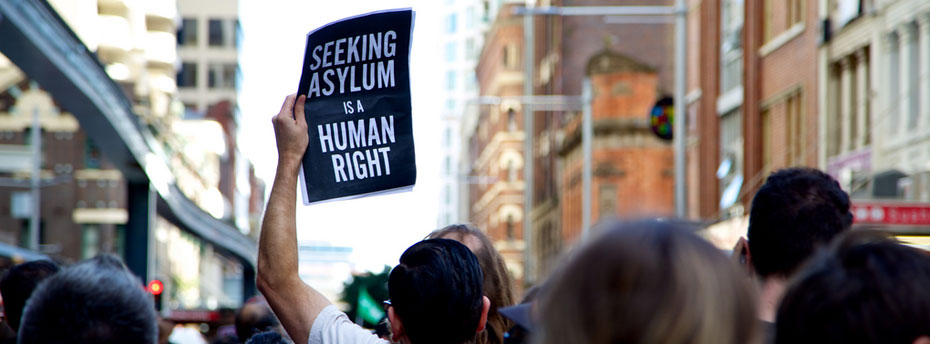
How Do I Get a Green Card through Asylee Status?

                          Image result for seeking asylum


 Who is an Asylee?

An Asylee is someone in the United States or at a port of entry who is found to be unable or unwilling to return to his or her country of nationality, or to seek the protection of that country because of persecution or a well-founded fear of persecution.

If you were granted asylee status at least one year ago then you may be eligible to apply for adjustment of status in the United States.


Eligibility for Adjustment of Status

In order to be eligible for a Green Card as an asylee, you must meet the following requirements:
  • You properly file Form I-485, Application to Register Permanent Residence or Adjust Status;
  • You are physically present in the United States at the time you file your Form I-485;
  • You have been physically present in the United States for at least one year after you were granted asylum;
  • You continue to meet the definition of a refugee, or to be the spouse or child of a refugee;
  • You have not firmly resettled in any foreign country;
  • Your grant of asylum has not been terminated;
  • You are admissible to the United States for lawful permanent residence or eligible for a waiver of inadmissibility or other form of relief; and
  • You merit the favorable exercise of discretion.

Bars to Adjustment

Depending on how you entered the United States or if you committed a particular act or violation of immigration law, you may be barred from adjusting status. The bars to adjustment do not apply to you if you are applying for a Green Card based on your asylee status.

Grounds of Inadmissibility

To qualify for a Green Card, you must be admissible to the United States. Reasons why you may be inadmissible are listed in the INA 212(a) and are called grounds of inadmissibility.
While in general, USCIS can only approve your Green Card application if none of the applicable grounds of inadmissibility apply to you, certain grounds of inadmissibility do not apply to asylum adjustments.
In addition, some grounds of inadmissibility may be waived for asylees applying for adjustment of status. See Form I-602, Application by Refugee for Waiver of Grounds of Excludability. If a waiver or other form of relief is granted, USCIS may approve your application for a Green Card if you are otherwise eligible.
Whether a waiver or other form of relief is available depends on the specific inadmissibility ground(s) that applies to you and the category you are adjusting under. Eligibility requirements for waivers and other forms of relief vary. 

How to Apply

If you are an asylee and you have been physically present in the United States for at least one year after being granted asylum, you may apply to become an LPR by filing Form I-485, Application to Register Permanent Residence or Adjust Status.

What to Submit (Principal Applicant)

The foreign national who was granted asylum is called the principal applicant. If you are the principal applicant, you should submit the following documentation and evidence to apply for a Green Card:
  • Form I-485, Application to Register Permanent Residence or Adjust Status with the required fee or with Form I-912, Request for Fee Waiver;
  • Proof of your grant of asylum (such as a copy of the letter, decision of an immigration judge, or Form I-94, Arrival/Departure Record that shows the date you were granted asylum);
  • Evidence of one-year physical presence in the U.S.;
  • Two passport-style photographs;
  • Copy of your government-issued identity document with photograph;
  • Copy of your birth certificate (if available);
  • Copy of your passport page with nonimmigrant visa (if available);
  • Copy of your passport page with admission or parole stamp (issued by a U.S. immigration officer) (if available);
  • Form I-693, Report of Medical Examination and Vaccination Record (you may submit this form together with Form I-485 or later, for example, when USCIS requests it or in person at your interview, if any);
  • Certified police and court records of criminal charges, arrests, or convictions (if applicable); and
  • Form I-602, Application by Refugee for Waiver of Grounds of Excludability (if applicable).

Family Members

If you were granted derivative asylum status based on your spouse or parent’s principal asylum grant, you may apply for a Green Card. 
Eligibility Criteria for Adjustment of Status as Derivative Applicants
In order to be eligible for asylum-based adjustment as a derivative applicant, you must meet the following requirements:
  • You properly filed your Form I-485:
  • You are currently the principal applicant’s spouse or child and the principal applicant still meets the definition of a refugee;
  • You were granted asylum:
    • As an accompanying derivative of the principal asylee because you were included on the principal applicant’s Form I-589, Application for Asylum and for Withholding of Removal, or
    • As a following-to-join beneficiary of an approved Form I‑730, Refugee/Asylee Relative Petition filed by the principal applicant;
  • You are physically present in the United States at the time you file your Form I-485;
  • You have been physically present in the United States for at least one year since you were granted asylum as a derivative;
  • Your grant of asylum has not been terminated;
  • You are admissible to the United States for lawful permanent residence or eligible for a waiver of inadmissibility or other form of relief; and
  • You merit the favorable exercise of discretion.
What to Submit (Derivative Applicants)
If you are applying to adjust status as a derivative applicant, you should submit the following documentation and evidence:
  • Form I-485, Application to Register Permanent Residence or Adjust Status, with the correct fee or with Form I-912, Request for Fee Waiver;
  • Copy of documentation showing your relationship to the principal applicant, such as a marriage certificate, birth certificate, or adoption decree;
  • Evidence of your asylum status (such as a copy of the letter, decision of an immigration judge,  Form I-94, Arrival/Departure Record, or approved I-730 Petition filed on your behalf that shows the date you were granted asylum as a derivative);
  • Evidence of one-year physical presence in the U.S.;
  • Two passport-style photographs;
  • Copy of your government-issued identity document with photograph;
  • Copy of your birth certificate (if available);
  • Copy of your passport  page with your nonimmigrant visa (if available);
  • Copy of your passport page with admission  or parole stamp (issued by a U.S. immigration officer) (if available);
  • Form I-693, Report of Medical Examination and Vaccination Record (you may submit this form together with Form I-485 or later, for example, when USCIS requests it or in person at your interview, if any);
  • Certified police and court records of criminal charges, arrests, or convictions (if applicable); and
  • Form I-602, Application by Refugee for Waiver of Grounds of Excludability (if applicable).

Saturday, July 8, 2017

Welcome to the United States: A Guide for New Immigrants


    Congratulations on becoming a permanent resident of the United States of America! On behalf of the president of the United States and the American people, we welcome you and wish you every success here. The United States has a long history of welcoming immigrants from all parts of the world. America values the contributions of immigrants who continue to enrich this country and preserve its legacy as a land of freedom and opportunity. As a permanent resident of the United States, you have made a decision to call this country your home. As you work to achieve your goals, take time to get to know this country, its history, and its people. It is now both your right and your responsibility to shape the future of the United States and to ensure its continued success. Exciting opportunities await you as you begin your life as a permanent resident of this great country. Welcome to the United States!

Here you can find many helpful information to help you get started on you new journey as an immigrant.

Table of Contents

A Guide for New Immigrants . . . . . . . . . . . . 1
Federal Departments and Agencies ...............................2
The United States Today ........................................3
Federal Holidays .............................................4
Contact USCIS ...............................................5
About This Guide . . . . . . . . . . . . . . . . . . . . . . . . . . . . . . . . . . . . . . . . . . . . . . . . 7
Where to Get Help ...........................................8
USCIS Online Resources ......................................10
Your Rights and Responsibilities as a Permanent Resident . . . . . . . . . . . . 13
Your Rights and Responsibilities ................................14
Maintaining Your Permanent Resident Status .......................16
If You Are a Conditional Permanent Resident ......................19
Finding Legal Assistance ......................................21
Consequences of Criminal Behavior for Permanent Residents ..........24
Getting Settled in the United States . . . . . . . . . . . . . . . . . . . . . . . . . . . . . . . . 27
Get a Social Security Number ..................................28
Find a Place to Live ..........................................30
Look for a Job ..............................................35
Child Care .................................................41
Transportation .............................................43
Taking Care of Your Money . . . . . . . . . . . . . . . . . . . . . . . . . . . . . . . . . . . . . . . 47
Personal Finance ............................................48
Paying Taxes ...............................................51
Protect Yourself and Your Money ................................53
Understanding Education and Health Care . . . . . . . . . . . . . . . . . . . . . . . . . . 57
Education in the United States ..................................58
Higher Education: Colleges and Universities .......................65
Adult Education ............................................67
Learn English ..............................................68
Health Care ................................................69
Other Federal Benefits Programs ................................72
 Keeping Your Home and Family Safe . . . . . . . . . . . . . . . . . . . . . . . . . . . . . . . 75
Be Prepared ................................................76
Stay Informed ..............................................78
Respond to an Emergency .....................................79
Learning About the United States . . . . . . . . . . . . . . . . . . . . . . . . . . . . . . . . . . 83
We the People: The Role of the Citizen in the United States ............84
How the United States Began ..................................85
Creating “A More Perfect Union” ...............................87
How the Federal Government Works .............................90
The Legislative Branch: Congress ................................91
The Executive Branch: The President .............................93
 The Judicial Branch: The Supreme Court ..........................93
 State and Local Government ...................................94
Experience the United States ...................................95
 Becoming a U .S . Citizen . . . . . . . . . . . . . . . . . . . . . . . . . . . . . . . . . . . . . . . . . . 97
Why Become a U.S. Citizen? ...................................98
Naturalization: Becoming a U.S. Citizen ..........................100
You’re on Your Way .........................................107

Follow this link for complete version of the guide by the US Government:  https://www.uscis.gov/sites/default/files/files/nativedocuments/M-618.pdf

Sunday, July 2, 2017

How do I get a Green card Through Family?


                                         Image result for green card

Having a Green Card (officially known as a Permanent Resident Card) allows you to live and work permanently in the United States. The steps you must take to apply for a Green Card will vary depending on your individual situation. Here you can find information on eligibility requirements, how to apply, and whether your family members can also apply with you for a green card through family.


You may be eligible to apply as a… If you are the…
Immediate relative of a U.S. citizen
  • Spouse of a U.S. citizen
  • Unmarried child under the age of 21 of a U.S. citizen
  • Parent of a U.S. citizen who is at least 21 years old
Other relative of a U.S. citizen or relative of a lawful permanent resident under the family-based preference categories
  • Family member of a U.S. citizen, meaning you are the:
    • Unmarried son or daughter of a U.S. citizen and you are 21 years old or older
    • Married son or daughter of a U.S. citizen
    • Brother or sister of a U.S. citizen who is at least 21 years old
  • Family member of a lawful permanent resident, meaning you are the:
    • Spouse of a lawful permanent resident
    • Unmarried child under the age of 21 of a lawful permanent resident
    • Unmarried son or daughter of a lawful permanent resident 21 years old or older
FiancĂ©(e) of a U.S. citizen or the fiancĂ©(e)’s child

  • Person admitted to the U.S. as a fiancĂ©(e) of a U.S. citizen (K-1 nonimmigrant)
  • Person admitted to the U.S. as the child of a fiancĂ©(e) of a U.S. citizen (K-2 nonimmigrant)
Widow(er) of a U.S. citizenWidow or widower of a U.S. citizen and you were married to your U.S. citizenited StatesUn spouse at the time your spouse died
 Abused spouse, child, or parent
(VAWA self-petitioner – victim of battery or extreme cruelty)
  • Abused spouse of a U.S. citizen or lawful permanent resident
  • Abused child (unmarried and under 21 years old) of a U.S. citizen or lawful permanent resident
  • Abused parent of a U.S. citizen

Green Card for Immediate Relatives of U.S. Citizen 
  • If you are in the United States you can apply for adjustment of status.You should also read the Instructions for Form I-485, Application to Register Permanent Residence or Adjust Status (PDF) before you apply.
  • If you are currently outside the United States  you may apply at a U.S. consulate abroad for an immigrant visa in order to come to the United States and be admitted as a permanent resident. This pathway is referred to as consular processing.(see consular processing section below)
Family-Based Preference Categories

Family members eligible to apply for a Green Card are described in the following family “preference immigrant” categories:

  • First preference (F1) - unmarried sons and daughters, 21 years of age and older, of U.S. citizens;
  • Second preference (F2A) - spouses and children (unmarried and under 21 years of age) of lawful permanent residents;
  • Second preference (F2B) - unmarried sons and daughters, 21 years of age and older, of lawful permanent residents;
  • Third preference (F3) - married sons and daughters of U.S. citizens; and
  • Fourth preference (F4) - brothers and sisters of U.S. citizens, 21 years of age and older.
If you are in the United States you can apply for adjustment of status.You should also read the Instructions for Form I-485, Application to Register Permanent Residence or Adjust Status (PDF) before you apply.
If you are currently outside the United States  you may apply at a U.S. consulate abroad for an immigrant visa in order to come to the United States and be admitted as a permanent resident based on a family preference category. This pathway is referred to as consular processing.(see consular processing section below)

FiancĂ©(e) of a U.S. citizen or the fiancĂ©(e)’s child

  • Eligibility Criteria
You may be eligible to receive a green card as a K nonimmigrant fiancé(e), spouse, or his/her minor child if you:

Are the beneficiary of an immigrant visa petition that was filed by a U.S. citizen for their spouse or fiancé(e), or the minor children of that spouse/fiancé(e)
Have been admitted to the United States as a K Nonimmigrant
Met the requirement to marry the U.S. citizen fiancé(e) within 90 days of entry, if a K-1 visa holder
Are eligible to adjust status as the spouse or child of a U.S. citizen, or the minor child of a K-1 visa holder
Have an immigrant visa immediately available
Are admissible to the United States
  • Application Process
If you entered the United States as a fiancĂ©(e) of a U.S. citizen (K-1), child of a fiancĂ©e of a U.S. citizen (K-2), or the spouse or child of a U.S. citizen (K-3 or K-4)  you will have to file for adjustment of status in order to get your green card and to remain legally in the United States.
To obtain a green card, you need to file Form I-485.

Widow(er) of a U.S. citizen 
  • Eligibility Criteria
You may be eligible to receive a green card through widow/widower status if you:

Were married to a U.S. citizen at the time he or she passed away
Either have a pending or approved Form I-130 or you have filed a Form
I-360 within 2 years of your spouse’s death (or no later than October 28, 2011, if your citizen spouse died before October 28, 2009, and you were married less than 2 years).
Are not remarried
Were not divorced or legally separated from your spouse at the time he or she died
Are able to prove that you were in a bona fide marital relationship until the  time of your spouse’s death
Are admissible to the United States
  • Application Process
To obtain a green card, you need to file Form I-360, Petition for Amerasian, Widow(er), or Special Immigrant, with all required documents as listed in the form instructions. If your spouse filed Form I-130, Petition for Alien Relative, before his or her death, we will consider the petition as if you had filed an I-360.
  • If You Live in the United States
You may file Form I-485, Application to Register Permanent Residence or Adjust Status, either at the same time you file your Form I-360 or after you file the Form I-360 whether it is pending or approved.  If you already filed Form I-485 based on the petition filed by your spouse, USCIS will continue to process this application and you do not need to file another one.

  • If You Live Outside of the United States
Your approved petition will be forwarded overseas to the U.S. embassy or consulate that has jurisdiction over where you live. For more information, see the “Consular Processing” section below.

Abused spouse, child, or parent
(VAWA self-petitioner – victim of battery or extreme cruelty)
  • Those Eligible to File
Spouse: You may file for yourself if you are, or were, the abused spouse of a U.S. citizen or permanent resident. You may also file as an abused spouse if your child has been abused by your U.S. citizen or permanent resident spouse.  You may also include on your petition your unmarried children who are under 21 if they have not filed for themselves.
Parent: You may file if you are the parent of a U.S. citizen, and you have been abused by your U.S. citizen son or daughter.
Child: You may file for yourself if you are an abused child under 21, unmarried and have been abused by your U.S. citizen or permanent resident parent. Your children may also be included on your petition. You may also file for yourself as a child after age 21 but before age 25 if you can demonstrate that the abuse was the main reason for the delay in filing.
  • Eligibility Requirements for a Spouse
Qualifying spousal relationship:
You are married to a U.S. citizen or permanent resident abuser or
your marriage to the abuser was terminated by death or a divorce (related to the abuse) within the 2 
years prior to filing your petition, or
your spouse lost or renounced citizenship or permanent resident status within the 2 years prior to filing your petition due to an incident of domestic violence, or
you believed that you were legally married to your abusive U.S. citizen or permanent resident spouse but the marriage was not legitimate solely because of the bigamy of your abusive spouse.
You have suffered battery/extreme cruelty by your U.S. citizen or permanent resident spouse:
You have been abused by your U.S. citizen or permanent resident spouse, or
your child has been subjected to battery or extreme cruelty by your U.S. or permanent resident spouse.
You entered into the marriage in good faith, not solely for immigration benefits.
You have resided with your spouse.
You are a person of good moral character.
  • Eligibility Requirements for a Child
Qualifying parent/child relationship:
You are the child of a U.S. citizen or permanent resident abuser, or
you are the child of a U.S. citizen or permanent resident abuser who lost citizenship or lawful permanent resident status due to an incident of domestic violence.
You have suffered battery/extreme cruelty by your U.S. citizen or permanent resident parent.
You have resided with your abusive parent.
You are a person of good moral character; a child less than 14 years of age is presumed to be a person of good moral character.
  • Eligibility Requirements for a Parent
Qualifying parent/son or daughter relationship:
You are the parent of a U.S. citizen son or daughter who is at least 21 years of age when the self-petition is filed, or
you are the parent of a U.S. citizen son or daughter who lost or renounced citizenship status related to an incident of domestic violence, or
you are the parent of a U.S. citizen son or daughter who was at least 21 years of age and who died within 2 years prior to filing the self-petition.
You have suffered battery or extreme cruelty by your U.S. citizen son or daughter.
You have resided with the abusive son or daughter.
You are a person of good moral character.
  • Application Process
You must complete the Form I-360, Petition for Amerasian, Widow(er), or Special Immigrant, including all supporting documentation.
You must file the form with the Vermont Service Center (VSC).
If you are living abroad at the time of filing the self-petition, you may file Form I-360 if:
the abuser is an employee of the U.S. government,
the abuser is a member of the uniformed services, or
you were subjected to battery or extreme cruelty in the United States.
If you are a self-petitioning spouse or child and you meet all filing requirements, you will receive a notice (Prima Facie Determination Notice) valid for 150 days that you can present to government agencies that provide certain public benefits to certain victims of domestic violence.
If your Form I-360, Petition for Amerasian, Widow(er), or Special Immigrant  is approved and you do not have legal immigration status in the United States, we may place you in deferred action, which allows you to remain in the United States

If you have an approved Form I-360, you may be eligible to file for a green card. If you are a self-petitioning spouse or child, your children listed on your approved Form I-360 may also be eligible to apply for a green card. For information about filing for a green card, see the Immigration Options for Victims of Crimes Brochure (PDF)


Consular Processing

The steps for consular processing are:

1. Determine Your Basis to Immigrate

The first step in consular processing is to determine if you are eligible to apply for a Green Card (lawful permanent residence). Most immigrants become eligible through a petition filed on your behalf by a family member or employer. Others become permanent residents by first obtaining refugee or asylum status, or through a number of other special provisions.

2. File the Immigrant Petition

When you know what category you believe best fits your situation, you usually will need someone else to file an immigrant petition for you.
  • Family-based immigrant petition: If you want to apply for a Green Card based on your family relationship, a U.S. citizen or lawful permanent resident relative must file a Form I-130, Petition for Alien Relative for you. 
Although you usually file immigrant petitions with USCIS, sometimes you can file a Form I-130 petition for an immediate relative (spouse, child, or parent of a U.S. citizen) with a U.S. embassy or consulate abroad. Situations where this may be applicable include:
  • If the U.S. citizen has been authorized to be continuously residing within the jurisdiction of the consular office for at least the previous 6 months
  • Members of the military
  • Emergency situations
  • Situations involving the health or safety of the petitioner
  • When in the national interests of the United States
Please check with the consulate before submitting a petition.

3. Wait for a Decision on Your Petition

USCIS notifies the petitioner of a decision. If USCIS denies the petition, the notice will include the reasons for denying the petition and whether you may appeal the decision. If the petition is approved and you live outside the United States (or live in the United States but want to apply for your immigrant visa abroad), USCIS will then send the approved petition to the Department of State’s National Visa Center. The petition will remain there until an immigrant visa number is available for you.

4. Wait for Notification from the National Visa Cente

The National Visa Center (NVC) is responsible for collecting visa application fees and supporting documentation. The NVC will notify the petitioner and you (the beneficiary) when the visa petition is received and again when an immigrant visa number is about to become available. They will also notify you when you must submit immigrant visa processing fees (commonly referred to as “fee bills”) and supporting documentation.

5. Go to Your Appointment

Once a visa is available or your  priority date is current (earlier than the cut-off date listed in the monthly Visa Bulletin), the consular office will schedule you for an interview. The consular office will process your case and decide if you are eligible for an immigrant visa.

6. Notify the National Visa Center of Any Changes

You do not need to contact the National Visa Center about your petition; they will contact you for the information they need. You should, however, contact the NVC if:
These changes may affect your eligibility or visa availability.

7. After Your Visa is Granted

If you are granted an immigrant visa, the consular officer will give you a packet of information. This packet is known as a “Visa Packet.” Do not open this packet.
You will need to pay a USCIS Immigrant Fee. USCIS uses this fee to process your immigrant visa packet and produce your Green Card. We encourage you to pay the fee online after you receive your visa packet and before you depart for the United States. 
When you arrive in the United States, you should give your Visa Packet to the U.S. Customs and Border Protection (CBP) officer at the port of entry. The CBP officer will inspect  you and determine whether to admit you into the United States as a lawful permanent resident. If the CBP officer admits you, you will then have lawful permanent resident status and be able to live and work in the United States permanently.

8. Receive Your Green Card

If you have paid the USCIS Immigrant Fee, you will receive your Green Card in the mail after you arrive in the United States. If you do not receive your Green Card within 45 days of your arrival, please call our National Customer Service Center at 1-800-375-5283 or  make an appointment  to visit your local USCIS field office.
If you did not pay the USCIS Immigrant Fee before you arrived in the United States, you will need to pay the fee before USCIS will send you a Green Card.

Thursday, June 29, 2017

The Trump ban 2.0 aka Executives Order on Visas


On June 26, 2017, the United States Supreme Court issued an order agreeing to hear the Administration’s appeals of the two adverse rulings by Federal Appeals Courts regarding Executive Order 13780 and partially granting the government’s request to stay the lower courts’ injunctions.  We will keep those traveling to the United States and partners in the travel industry informed as we implement the order in a professional, organized, and timely way. 
As of June 29, 2017, at 8:00 pm Eastern Daylight Time, we will begin implementing the Executive Order at our embassies and consulates abroad in compliance with the Supreme Court’s decision and in accordance with the Presidential Memorandum issued on June 14, 2017.  Our implementation will be in full compliance with the Supreme Court’s decision.
We do not plan to cancel previously scheduled visa application appointments.  In accordance with all applicable court orders, for nationals of the six designated countries, a consular officer will make a determination in the course of the interview whether an applicant otherwise eligible for a visa is exempt from the E.O. or, if not, is eligible for a waiver under the E.O., and may be issued a visa.
The E.O. provides specifically that no visas issued before its effective date will be revoked pursuant to the Executive Order, and the E.O. does not apply to nationals of affected countries who have valid visas on June 29, 2017. 
The E.O. further instructs that any individual whose visa was marked revoked or cancelled solely as a result of the original E.O. issued on January 27, 2017 (E.O. 13769) will be entitled to a travel document permitting travel to the United States, so that the individual may seek entry.  Any individual in this situation who seeks to travel to the United States should contact the closest U.S. embassy or consulate to request a travel document. 
Frequently Asked Questions
  • What does the Supreme Court’s decision mean for applicants for U.S. visas?

The Supreme Court’s order specified that the suspension of entry provisions in section 2(c) of Executive Order 13780 may not be enforced against foreign nationals who have a credible claim of a bona fide relationship with a person or entity in the United States. All other foreign nationals of the designated countries are subject to the provisions of the Executive Order, which will be implemented worldwide as of June 29, 2017, at 8:00 pm, EDT, taking into account the Supreme Court decision.  The Executive Order prohibits the issuance of U.S. visas to nationals of Iran, Syria, Sudan, Libya, Somalia, and Yemen unless they are either exempt or are issued a waiver. Consular officers first determine whether the applicant qualifies for the visa class for which they are applying before considering whether an exemption to the executive order applies or whether the applicant qualifies for a discretionary waiver.
  • What nonimmigrant visa classes are subject to the Executive Order?

The Supreme Court’s order specified that the suspension of entry in section 2(c) of Executive Order 13780 may not be enforced against foreign nationals who have a credible claim of a bona fide relationship with a person or entity in the United States.  Applicants seeking B, C-1, C-3, D, or I visas will need to demonstrate that they have the required bona fide relationship in order to be exempt, or they may qualify for a waiver pursuant to the terms of the E.O.  Qualified applicants in other nonimmigrant visa categories are considered exempt from the E.O., as a bona fide relationship to a person or entity in the United States is inherent in the requirements for the visa classification, unless the relationship was established for the purpose of evading the order. 
  • What immigrant visa classes are subject to the Executive Order?

Qualified applicants in the immediate-relative and family-based immigrant visa categories are exempt from the order since having a bona fide close familial relationship is inherent in the requirements for the visa.  Likewise, qualified employment-based immigrant visa applicants generally are exempt from the E.O., since they have a bona fide formal, documented relationship with a U.S. entity formed in the ordinary course.  Unlike other employment-based immigrant visa applicants, certain self-petitioning employment-based first preference applicants with no job offer in the United States and special immigrant visas under INA section 101(a)(27)) may be covered by the E.O. and, consequently, would need to demonstrate that they have a bona fide relationship with an entity in the United States or otherwise qualify for a waiver.  Diversity visa applicants will need to demonstrate a qualifying relationship or qualify for a waiver since a relationship with a person or entity in the U.S. is not required for such visas.    
An individual who wishes to apply for an immigrant visa should apply for a visa and disclose during the visa interview any information that might demonstrate that he or she is exempt from section 2(c) of the Executive Order.  A consular officer will carefully review each case to determine whether the applicant is affected by the E.O. and, if so, whether the case qualifies for a waiver.
  • If a principal visa applicant qualifies for an exemption or a waiver under the E.O., does a qualified derivative also get the benefit of the exemption or waiver?

Yes, eligible derivatives of these classifications are also exempt.
  • Does this Order apply to dual nationals?

This Executive Order does not restrict the travel of dual nationals, so long as they are traveling on the passport of an unrestricted country and, if needed, hold a valid U.S. visa. 
Our embassies and consulates around the world will process visa applications and issue nonimmigrant and immigrant visas to otherwise eligible visa applicants who apply with a passport from an unrestricted country, even if they hold dual nationality from one of the six restricted countries. 
  • Does this apply to U.S. Lawful Permanent Residents?

No. As stated in the Order, lawful permanent residents of the United States are not affected by the Executive Order.
  • Are there special rules for permanent residents of Canada?

Permanent residents of Canada who hold passports of a restricted country can apply for an immigrant or nonimmigrant visa to the United States if the individual presents that passport, and proof of permanent resident status, to a consular officer.  These applications must be made at a U.S. consular section in Canada.  A consular officer will carefully review each case to determine whether the applicant is affected by the E.O. and, if so, whether the case qualifies for a waiver.
  • Will you process waivers for those affected by the E.O.?  How do I qualify for a waiver to be issued a visa?

As specified in the Executive Order, consular officers may issue visas to nationals of countries identified in the E.O. on a case-by-case basis, when they determine: that issuance is in the national interest, the applicant poses no national security threat to the United States, and denial of the visa would cause undue hardship.
  • What is a close familial relationship for the purposes of determining if someone is subject to the E.O. per the Supreme Court decision? 

A close familial relationship is defined as a parent (including parent-in-law), spouse, fiancĂ©, child, adult son or daughter, son-in-law, daughter-in-law, sibling, whether whole or half, and including step relationships.  “Close family” does not include grandparents, grandchildren, aunts, uncles, nieces, nephews, cousins, brothers-in-law and sisters-in-law, and any other “extended” family members.
  • I sponsored my family member for an immigrant visa, and his interview appointment is after the effective date of the Order. Will he still be able to receive a visa?

The Supreme Court’s order specified that section 2(c) of the Executive Order may not be enforced against foreign nationals who have a credible claim of a bona fide close familial relationship with a person or a formal, documented relationship with an entity in the United States that was “formed in the ordinary course, rather than for the purpose of evading [the Executive Order].”  One example cited in the Supreme Court’s decision was a foreign national who wishes to enter the United States to live with or visit a family member, thereby demonstrating a bona fide relationship with a person in the United States.  Applicants for immigrant visas based on family relationships are excluded from the E.O. under the Supreme Court’s decision if they otherwise qualify for the visa. 
  • Can those needing urgent medical care in the United States still qualify for a visa?

The Executive Order provides several examples of categories of cases that may qualify for a waiver, to be considered on a case-by-case basis when in the national interest, when entry would not threaten national security, and denial would cause undue hardship.  Among the examples provided, a foreign national who seeks to enter the United States for urgent medical care may be considered for a waiver.
An individual who wishes to apply for a waiver should apply for a visa and disclose during the visa interview any information that might qualify the individual for a waiver.  A consular officer will carefully review each case to determine whether the applicant is affected by the E.O. and, if so, whether the case qualifies for a waiver.
  • I’m a student or short-term employee that was temporarily outside of the United States when the Executive Order went into effect.  Can I return to school/work?

If you have a valid, unexpired visa, the Executive Order does not apply to your return travel.
If you do not have a valid, unexpired visa, the Supreme Court’s decision specified that section 2(c) of the Executive Order may not be enforced against foreign nationals who have a credible claim of a bona fide relationship with a person or entity in the United States.  One example cited in the Supreme Court’s decision was a student from a designated country who had been admitted to U.S. university, thereby demonstrating a credible claim of a bona fide relationship with an entity in the United States.
An individual who wishes to apply for a nonimmigrant visa should apply for a visa and disclose during the visa interview any information that might demonstrate that he or she is exempt from section 2(c) of the Executive Order.  A consular officer will carefully review each case to determine whether the applicant is affected by the E.O. and, if so, whether the case qualifies for a waiver.  

Feature video